THAILAND/VIETNAM: Thai business giant reconsider international expansion
Siam Cement Group (SCG) says its planned petrochemical complex in Vietnam would be further postponed by six months, pending the conclusion of an agreement with a new joint-venture partner following the exit of Qatar Petroleum International (QPI). The USD4.5-billion fully integrated complex is to be the first of its kind in Vietnam and a key regional flagship for the Thai conglomerate.
For Siam Cement, the massive size of the Vietnamese complex dictates that it would be better to wait until every major component is in place, said chief financial officer Chaovalit Ekkabut. SCG is now being in talks with a number of potential new partners who are keen to jointly invest, he added. "We think we are still in the timeline to complete everything in six months so that the project would go ahead and be completed as planned," said Chaovalit, noting that the focus was on the long-term potential of petrochemical demand in Vietnam rather than the normal cycles of the global petrochemical business.
To be developed on Long Son Island in southern Ba Ria Vung Tau province, the complex will consist of a factory capable of turning out 1.65 million tons of olefins, 1.45 million tons of polyolefins, 280,000 tons of chlor-alkali, and other materials each year. The site will also include support facilities, including a port, warehouses and a power plant.
SCG holds 46 % in the Long Son Petrochemicals Project, in which QPI previously had a 25 % stake. The remaining 29 % belongs to two Vietnamese partners—PetroVietnam and Vinachem.
The Qatari partner has maintained raw material supply contracts for the complex which was granted an investment license in 2008. Prior to the latest delay, it was projected to come onstream in 2018.
"Demand growth for olefins in Vietnam is substantial while the supply is quite limited. This is the long-term potential of the project that we have focused on rather than the short-term business cycle," Chaovalit said.
Chaipat Thanawattano, an analyst with DBS Vickers Securities (Thailand), said SCG wanted to avoid bigger risks and financial exposure and thus decided to wait for a new partner. Now scheduled to start production in 2019, the Vietnamese complex "would suffer" from an unfavourable business cycle during the initial years of operation when new supplies of olefins are projected to enter the market. "If the project was in operation now as originally planned, it would enjoy high margins on petrochemical products, especially olefins which are in tight supply for the time being," Chaipat said.
Nat Panassutrakorn, an analyst with KGI Securities, agreed, saying that the petrochemical industry was expected to flourish over the next two years as some planned projects in the Middle East have been postponed. At the same time, petrochemical demand continues to expand by 4-5% annually. "Besides, the appreciating US dollar has helped offset the impact of falling product prices and thus boosted profit margins of petrochemical businesses," Nat wrote in a recent report. "This is clearly the way SCG is doing business. If there are any uncertainties, they will not go ahead with the project. But given the project's location and its ability to use either gas or naphtha as a feedstock, I think the impact will not be significant," he told Asia Focus.
Maybank Kim Eng estimates that the spread between HDPE (high-density polyethylene) and naphtha will be quite high at around USD 700 per tonne this year. Despite a drop from the average of USD 747 in 2015, SCG's petrochemical business will enjoy a lower feedstock cost as naphtha prices have also fallen in line with the global oil prices.
Vietnam over the past decade attracted huge attention from foreign investors seeking to be part of the petrochemical industry there. The Hanoi government's development strategy for the oil industry calls for five petrochemical complexes by 2020, including the SCG-led Long Son site.
Apart from generous incentives, Vietnam holds great potential for the petrochemical industry, thanks partly to a long coastline that makes exporting convenient. The country's increasing integration with the global market through free-trade agreements (FTAs) including the Trans Pacific Partnership (TPP) has allowed Vietnamese products to become more competitive internationally.
"It is obvious that Vietnam has great potential for the petrochemical industry, which is becoming lucrative for foreign investors. However, it is worth noting that it is not easy to enter the market as licensing will take years and strategic cooperation with state-owned PetroVietnam is required," wrote Business Development Group (BDG) Vietnam.
Saudi Basic Industries Corp (Sabic), one of the world's largest petrochemical companies, has mentioned that Vietnam is among countries it is looking to expand into, together with Indonesia and Malaysia where it is looking to switch from being a seller of petrochemicals in the region to a manufacturer.
Source: Daily “The Bangkok Post”, Bangkok; 29 Feb 2016
(Syed Rashid Ali, Karachi, Pakistan)

Like this article? Share Now!

More news from this section
YFAI to build new plant in the Czech Republic
Yanfeng Automotive Interiors (YFAI) announced that it will establish a new manufacturing site in Planá nad Luznici, Czech Republic. According to YFAI, construction work on the new plant will start soon. Operational start is planned by early 2018. The company says it plans to create about 300 new jobs in the region.
read moreCapvis acquires Hennecke from Adcuram
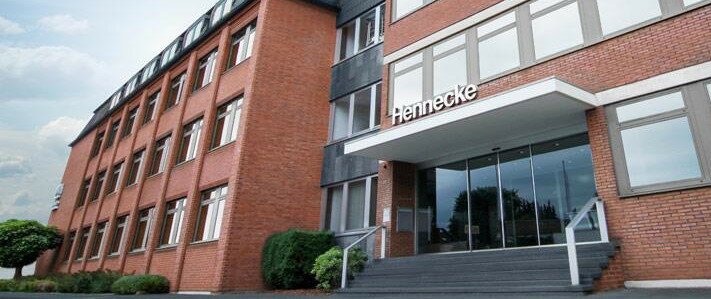
Capvis Equity IV LP, a private equity fund advised by Capvis Equity Partners AG, has agreed to acquire 100 % of the shares of the German Hennecke Group from the Munich-based industrial group Adcuram, its former owner. Financial details were not disclosed. The transaction is subject to approval from antitrust authorities and is expected to close during the second quarter of 2016.
read more
Write a comment on this article now