

Cooperation between Team Sonnenwagen, Covestro and Sika
A team of students from RWTH Aachen University and FH Aachen plan to enter their self-constructed, solar-powered electric car in perhaps the world’s toughest solar car race: the Bridgestone World Solar Challenge 2019. After the successful première at the previous year’s race, Team Sonnenwagen will attempt for the second time to be the fastest to complete the 3,000-kilometer route in Australia without a single drop of fuel.
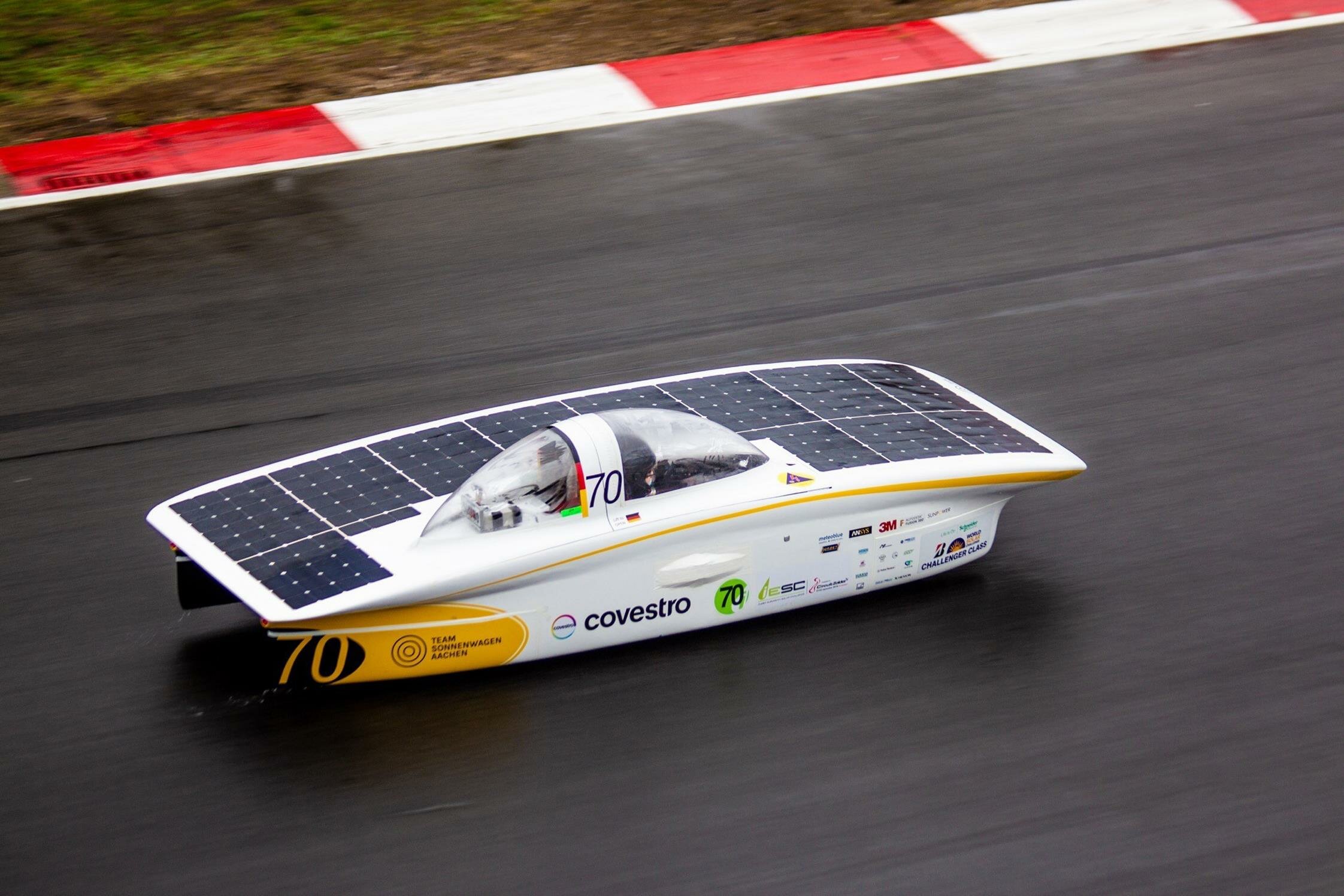
The student team from Aachen uses plastics, composites and metals for the construction of the fast and lightweight Sonnenwagen. (Source: Sonnenwagen Aachen)
Covestro announced that it shares the students’ enthusiasm and supports the project with different materials and technical service, and as the team’s main sponsor. The partners hope to demonstrate that concepts for the future of mobility are already possible today – taking into account aspects such as lightweight construction, electromobility and photovoltaics. At the European Coatings Show 2019 from 19 – 21 March 2019, Covestro will present the Sonnenwagen from the first race at its “City of Sustainnovation” (hall 4A, stand 528) at NürnbergMesse.
The team that wants to be the first to cross the finish line in Adelaide will need a vehicle that is fast, and therefore lightweight. Different materials are used to build such a vehicle, including high-quality plastics as well as composite materials and metals. The best method for permanently fastening different substrates together is adhesive bonding; it is also a key technology in the automotive industry.
Joining the parts of a solar car by hand, however, has its own challenges. This includes preparing the surfaces as well as improving the adhesive strength of different substrate surfaces. The primary concern, however, is the lasting quality of the bond when the adhesive is dry. The Sonnenwagen will be subjected to extreme conditions on its journey through the Australian Outback: high temperatures, extreme aridity, but also constant and at times heavy vibrations will put the adhesive to the test.
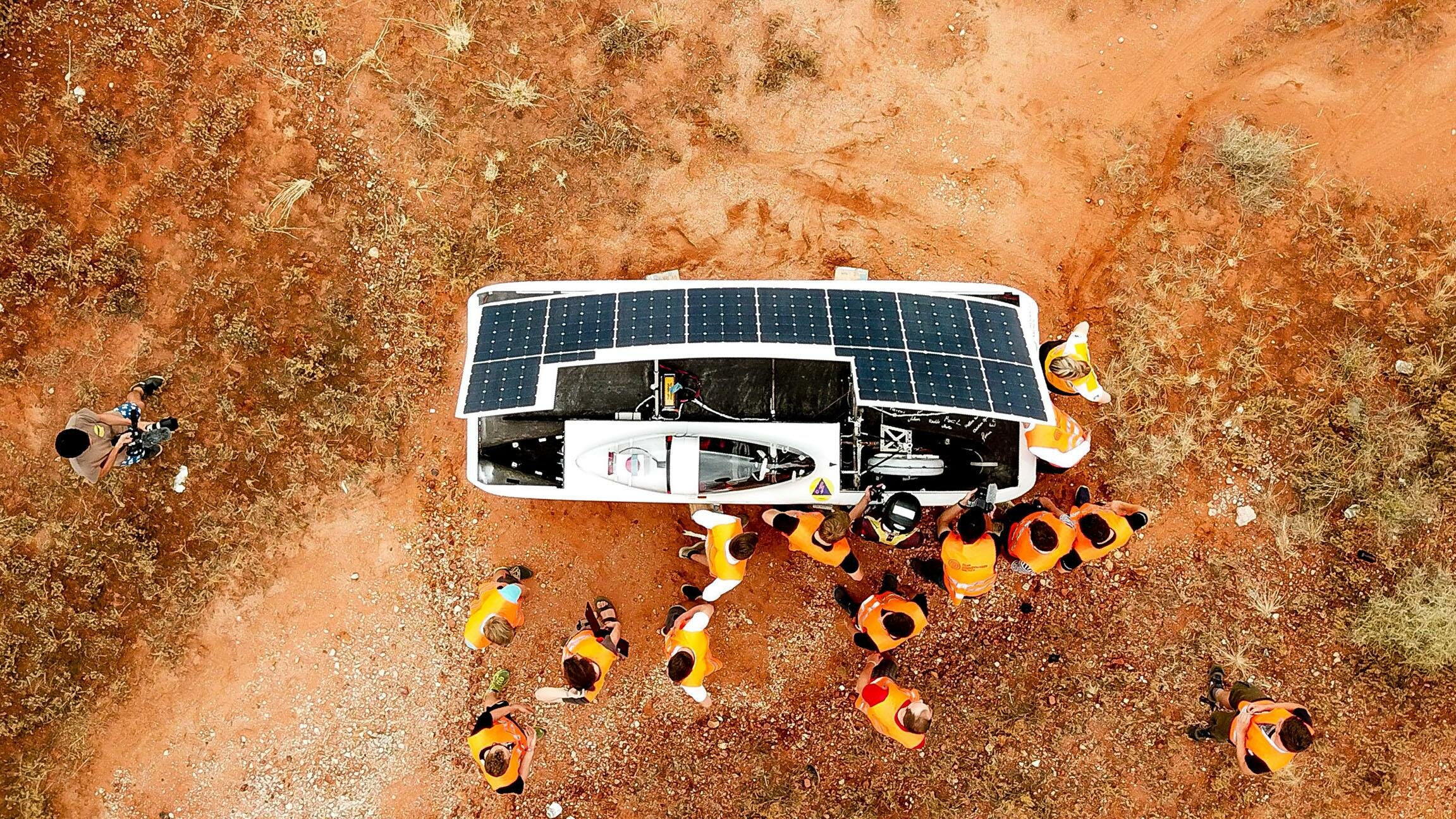
Various two-component adhesives of the SikaForce range from Sika Automotive will be used in the new Sonnenwagen. (Source: Sonnenwagen Aachen)
For its new solar car, the Sonnenwagen Team relies on two-component polyurethane adhesives from Sika Automotive, which are based on the polyurethane raw materials of the Desmodur and Desmophen product lines from Covestro. The products from the SikaForce product line are said to feature very good mechanical stability and flexibility. They are ideal for bonding complex parts, such as carbon-fibre-reinforced plastics, and are tailor-made for such ultra-lightweight, high-strength designs.
“Thanks to this adhesive, we were able to build this year’s Sonnenwagen in the shape we wanted,” said Severin Kobus, Co-Chairman of the Sonnenwagen Aachen team. “We used different adhesives – from flexible to highly elastic – in order to meet the requirements in terms of the design, components and substrates.”
Pascal Obringer, Global Head of Product Management at Sika Automotive, added: “Polyurethane adhesives are a perfect fit for the innovative concepts of future mobility. The Sonnenwagen project is an ideal example of the role our adhesives can play in the future.”
The Bridgestone World Solar Challenge is considered the toughest solar race in the world and takes place in Australia every two years. Teams from around the world compete with self-constructed vehicles to be the fastest to overcome the more than 3,000-kilometer route from Darwin to Adelaide – powered only by solar energy.
https://automotive.sika.com
www.covestro.com
www.sonnenwagen.org
Like this article? Share Now!

More news from this section
Icynene-Lapolla introduces new open-cell no-mix SPF insulation
Icynene-Lapolla has launched the all-new Icynene OC No-Mix insulation, an open-cell spray foam solution for both homes and commercial structures. According to the company, the material is notable for providing enhanced energy efficiency, long-term energy cost savings and an easy no-mix application. Icynene OC No-Mix was introduced at the SPFA Sprayfoam Show 2019 Convention & Expo, which was held from 4 – 7 February 2019 in Daytona Beach, FL, USA.
read moreLife-time recycling loops for elastomer products
The need for life-time recycling loops for all kinds of products is steadily increasing. Tires and rubber products prove no exception. A recent paper from the University of Twente describes the devulcanization of rubber articles including tires of various sorts. It highlights what has been achieved for different major rubber types, but also what hurdles are to be overcome before rubber recycling is as obvious a technology as the manufacturing of first use rubber-articles.
read more
Write a comment on this article now