


"Design in the sign of sustainability" – Students' unique shoe creations, combinations of design, performance, and sustainability, will be presented at the BASF stand at Simac. (Source: BASF)
BASF: Sustainable footwear solutions, materials and coatings for shoe soles
BASF will showcase its solutions for the footwear industry, including sustainable polyurethane systems, TPU and E-TPU, 3D printed moulds, functional coatings, and the comfort of a sneaker for dress shoes at Simac 2021. The international machinery and technology exhibition for shoes is being held in Milan, Italy, from 22 – 24 September 2021. In hall 14, stand G40, visitors will be given insights into sustainable footwear solutions, high performance materials and coating solutions for shoe soles.
According to BASF, future-oriented footwear materials are inconceivable without sustainability. Sustainability is a main pillar of the company’s strategy and an integral part of all business decisions. That is why the company invests around EUR 2 billion per year in research and development and drives the development of new products that make a significant contribution to sustainability. BASF said its approach to a circular economy in footwear consists of three fields of action: Reduce, Recycle, Rethink. At the show, BASF experts will give a deep insight into this approach and present sustainable material solutions for polyurethane systems and thermoplastic polyurethanes.
The main goal is to reduce the consumption of fossil resources and thus CO2 emissions. Elastopan N (PU systems) and Elastollan N (TPU) contribute to this, as they are partly based on renewable raw materials such as sugar, corn or castor oil. These bio-based plastic solutions are available in various densities and degrees of hardness and are suitable for all applications in the footwear sector. In addition, the company's integrated production system enables the substitution of fossil by renewable feedstock derived from bio-waste. This concept, called the BASF biomass balance approach, can be compared to green electricity: When alternative energy sources (e.g., wind and solar energy) are fed into the power grid, the output of the end product, electricity, remains unchanged. Similarly, at BASF: the bio-based or recycled raw materials are fed into the production network at the beginning and then further processed in many steps, e.g., into plastics. This principle offers the advantage that greenhouse gas emissions are reduced, and fossil raw materials are saved, while product quality and properties remain the same. For customers in the footwear industry, this also means that the product design and the processing for shoes do not have to be adapted. This concept can be applied to its complete range of PU systems, TPU and E-TPU for footwear, said the company.
To achieve the ultimate goal of a circular economy, we need to rethink the production and use of footwear in general, said BASF. This is the task that Italian designer Linda Lipari, together with designer Pierpaolo Righetto and students from Calzaturiero Politecnico (the School of Footwear Design and Technology) in Padua, Italy, dedicated themselves to during the recent design competition, namely "design in the sign of sustainability". The basis for the students' various creative interpretations is the designers' "RE2.0" sole design. RE implies Restart, Rethink, Recreate, Reconquer the world. The students' unique shoe creations, combinations of design, performance, and sustainability, will be presented at the BASF stand at Simac.
Furthermore, the company will present coatings technologies for highly flexible substrates from its Coatings division. These solutions protect, functionalise and colour flexible surfaces. They set new standards in design opportunities, individualisation and enable customers to optimise their processes, said BASF. As NovaFlex valure, the company markets reverse-coated substrates which can achieve unique optical and haptic properties by combining paint formulation, texture, and carrier material. NovaCoat-D combines in-mould coating and release coating in a new way. Besides its demould properties, the coating provides protection against sunlight, scratches, and dirt. BASF said it can offer a wide range of colours and effects and bring in additional functionalities for e.g., shoe uppers and sole.
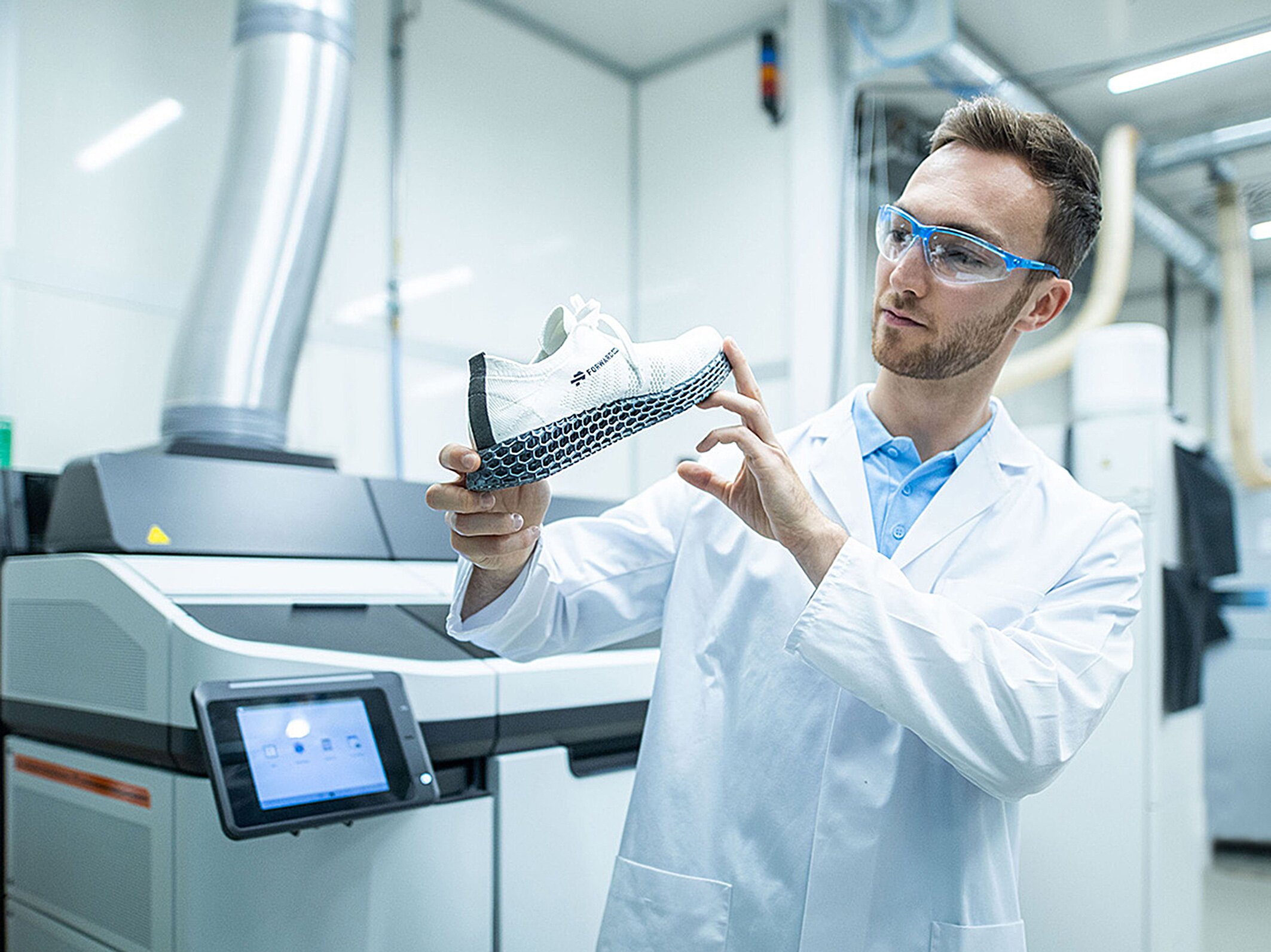
3D printed moulds and tools for completely 3D printed shoes will be presented at the BASF stand at Simac. (Source: BASF)
Infinergy is an expanded thermoplastic polyurethane (E-TPU) from BASF. According to the company, the closed-cell, elastic particle foam combines the properties of TPU with the advantages of foams, making it as elastic as rubber but lighter. It provides exceptional cushioning. Initially it was designed for the world of sports. Since 2015 Infinergy is used in the midsole of safety shoes and setting new standards for cushioning and comfort in shoes. These standards are now transferred to business and casual shoes. Professionals who are constantly on the go can now benefit from Infinergy in particular as it returns the energy in each step, reducing fatigue and dampening shock on joints. The material offers a natural cushioning effect at the heel and middle part of the foot in the sole. The responsiveness and rebound allows more comfort in movement which is a real relief for professionals battling long-standing hours at work and commute, said the company.
www.footwear.basf.com

Like this article? Share Now!

More news from this section

The Center for the Polyurethanes Industry (CPI) of the American Chemistry Council (ACC) announced that the full programme for the upcoming 63rd Polyurethanes Technical Conference, the longest-running polyurethanes conference in North America, is now available. The event schedule – including descriptions, session organisers, moderators, and presentations for each session – can be found here. The conference will take place 5 – 7 October 2021 at the Gaylord Rockies Resort & Convention Center in Denver, Colorado, USA.
read moreHuntsman Building Solutions: EPD for two closed cell spray foam systems
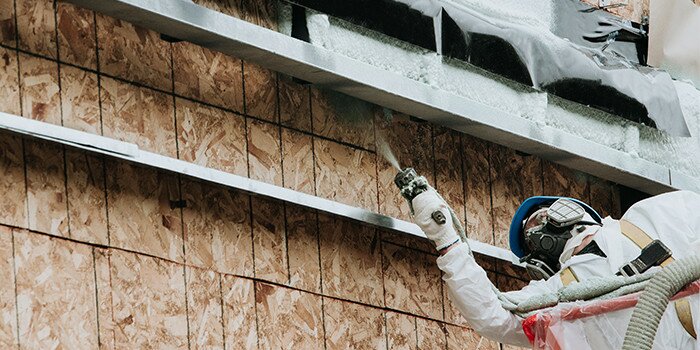
On 25 August 2021, Huntsman Building Solutions announced an Environmental Product Declaration (EPD) for its Heatlok HFO and Heatlok Soya HFO closed cell spray foam systems. The independent, third-party document, completed by Sphera and certified by UL, provides objective and comparable information about the lifecycle impacts and emissions of the two spray foam products. Heatlok HFO and Heatlok Soya HFO both leverage fourth generations blowing agents, with the former product branded and distributed within the U.S. market and the latter is branded and distributed within Canada.
read more
Write a comment on this article now