


Effective since 2002: Getzner Werkstoffe protects Vienna’s Musikverein building against noise and vibrations. (Source: Getzner Werkstoffe)
Getzner: Mass-spring system ensures excellent acoustics in Vienna concert hall
Millions of people in more than 90 countries watch the Vienna New Year's Concert each year. The Golden Hall in Vienna's Musikverein building is one of the acoustically best halls in the world and the pride and joy of the concert house. When an underground tunnel was built just four meters from the building in 2002, vibration protection specialist Getzner Werkstoffe supplied Sylodyn discrete bearings for the mass-spring system (MSS), thus ensuring continued, undisturbed music enjoyment. The system has now been in operation for 17 years, has withstood a load of roughly 450 million tonnes and continues to offer unchanged high performance.
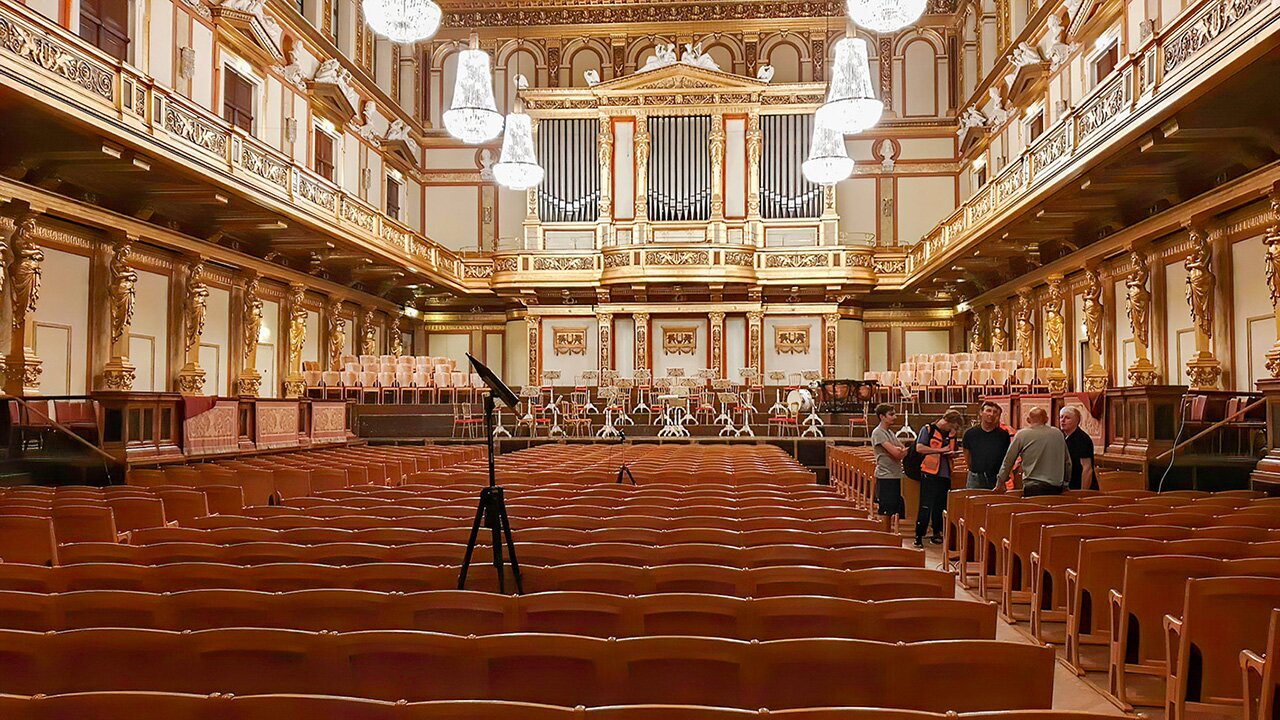 The secondary airborne noise emissions were measured in the Golden Hall, proving that the bearing material properties remain unchanged after 17 years. (Source: Getzner Werkstoffe)
In 2019, various measurements were used to check whether the mass-spring system with 192 Sylodyn discrete bearings still fulfilled the high requirements set during the planning and construction phase. In tests with various train types, the natural frequency of the mass-spring system and the radiation of vibrations to the slab, tunnel floor and tunnel wall as well as the slab deflection when trains pass were measured. In three concert halls, including the Golden Hall, secondary airborne noise emissions were measured at a height of 2.5 m.
 Mass-spring systems from Getzner Werkstoffe have been installed in metro, railway, and rapid transit lines all around the world. (Source: Getzner Werkstoffe)
The results were remarkable: "Even after 17 years, the vibration isolation was still as efficient as it was on day one. All assessment criteria for vibration emission are still being fulfilled," said Markus Heim, project manager at Getzner Werkstoffe. "No changes were identified in the vertical natural frequency of the pulse-excited slab of the mass-spring system compared to the acceptance tests in 2003." The dynamic properties of the Sylodyn bearings have remained the same over all these years.
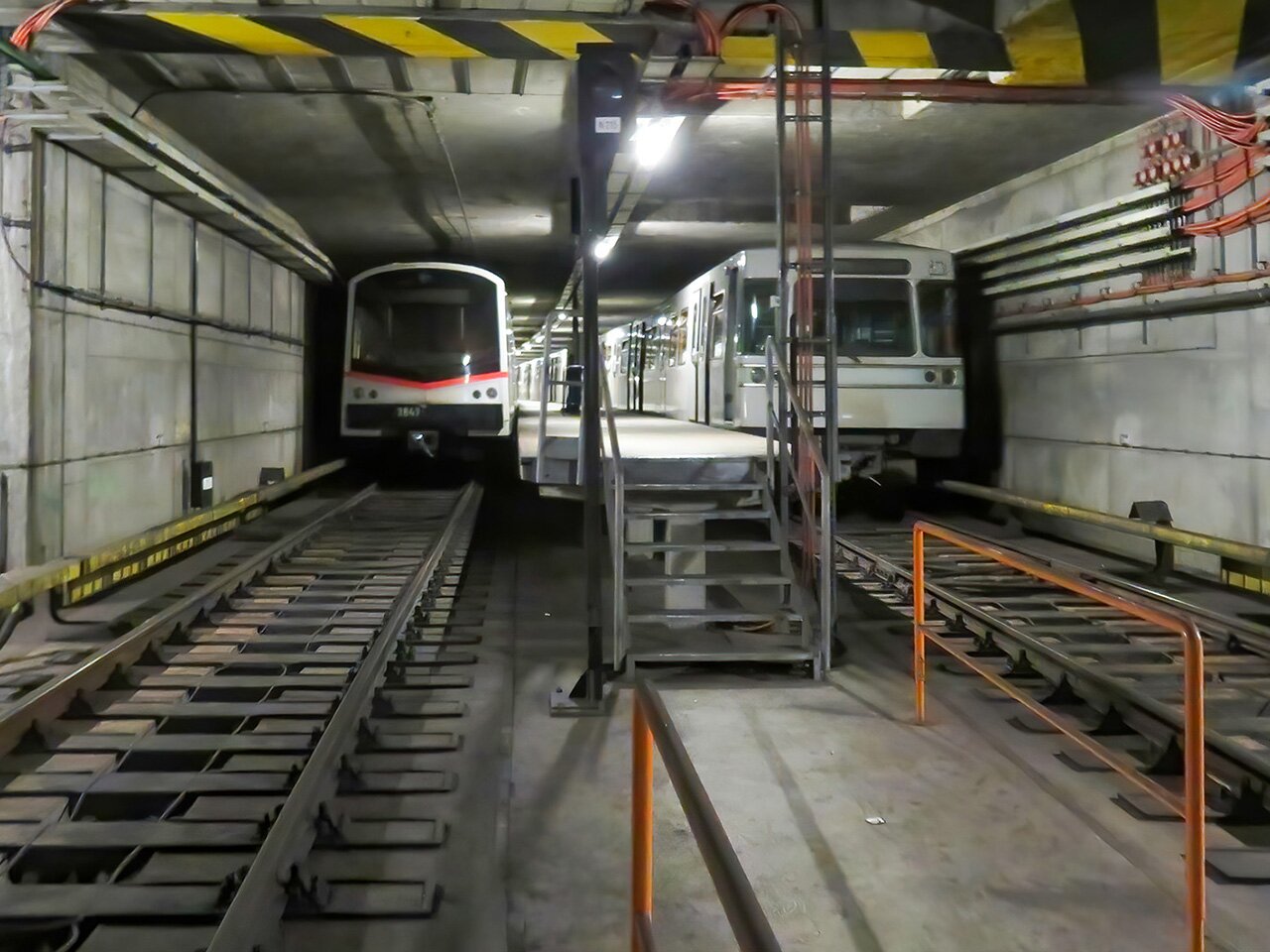 The underground railway tunnel is just 4 metres from the Musikverein building. Showing both train types in use (Source: Getzner Werkstoffe)
New measurements were taken in 2019 due to a change in conditions: The Vienna underground now operates with more modern trains, which generate noise and vibrations in a different way to the earlier trains. The building structure has now also been adapted, for example new windows have been installed. Markus Heim: "In view of the changed conditions, we wanted to check the long-term behaviour of the MSS, which has already had to withstand a total of approximately 450 million metric tons from 250 trains per track per day since the tunnel's construction."
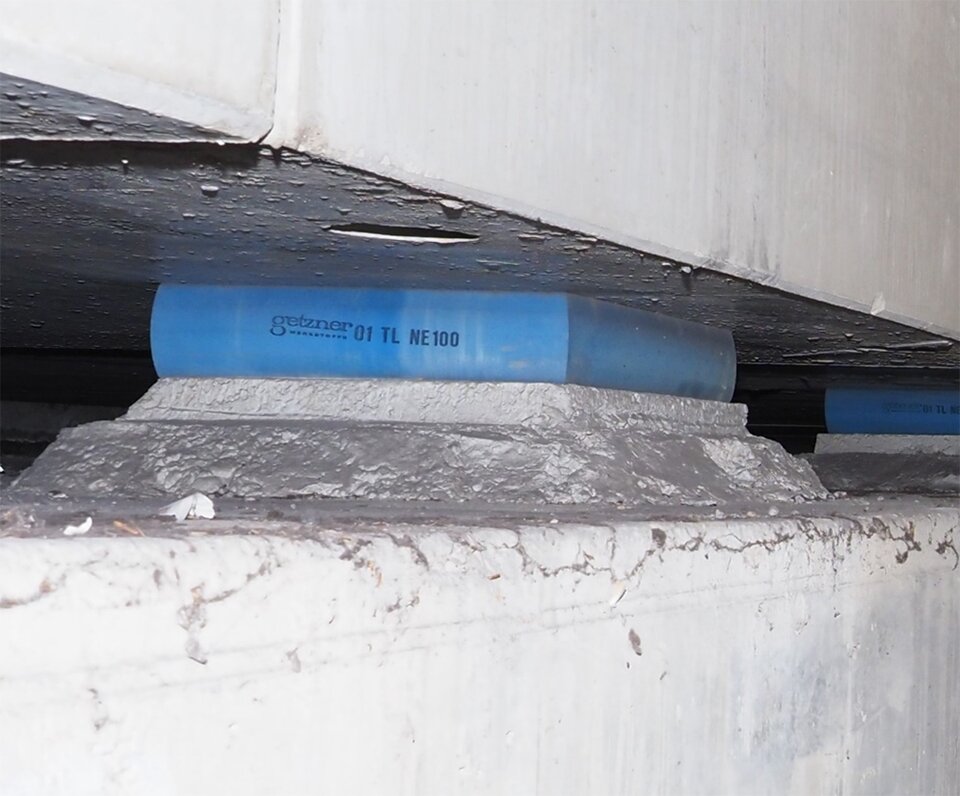 The mass-spring system with Sylodyn point bearings and a vertical natural frequency of 5.5 Hz. (Source: Getzner Werkstoffe)
Back then, the requirements were already very high. For the construction of a new underground line next to Vienna's Musikverein building to be approved in 2002, it was first necessary to prove with appropriate investigations that the noise and vibration levels in the famous concert halls would not increase. "Our solution has a vertical natural frequency of 5.5 Hz – the lowest vertical natural frequency ever achieved with a mass-spring system made from elastomer bearings," said Markus Heim, who is also responsible for the Austrian supplier's system development. Visitors to the concert hall are optimally protected from disruptive vibrations and noise generated by the nearby underground line – in the same way as on day one.

Like this article? Share Now!

More news from this section
Rampf: Solutions for polyurethane upcycling

Rampf Eco Solutions is presenting its recycled polyols together with chemical processes and multifunctional plants for the upcycling of polyurethane residues at the Utech Europe 2021 (Stand D37) trade fair from 16 – 18 November 2021 in Maastricht, The Netherlands.
read moreCovestro: Growing TPU product portfolio based on alternative resources
Covestro’s product range in Europe is to be expanded to include mass-balanced thermoplastic polyurethanes from as early as the beginning of 2022, and in Asia at a later date. This was announced recently by the company.
read more
Write a comment on this article now